 0476906075 vacation@iwandertassie.com
When Britain declared war on Napoleon’s France in May 1803, it didn’t just stir the pot in Europe; it sent shockwaves all the way down to the far end of the planet.
This was supposed to be the quiet, formative years of Australia’s convict settlements, right? Time to put down roots, build a life, maybe get a little peace. Nope. Chaos came knocking. Supply lines were cut. New colonies abandoned. And one stubborn explorer, Matthew Flinders, ended up in a situation so bad it nearly killed him.
So, how did a European war almost choke Australia to death before it could even take a breath? And how did one bloke’s refusal to quit end up mapping a whole continent?
Let’s get one thing straight: Europe was always just one awkward conversation away from another war. In 1803, Britain finally pulled the trigger on France again. And, in classic European fashion, Spain jumped into the brawl a year later. Suddenly, Britain was fighting not one, but two superpowers at once.
Meanwhile, thousands of kilometres away (because colonialism knows no bounds), the convict settlements in Van Diemen’s Land were just getting their footing. And what happens when Britain gets distracted? You guessed it: the colonies get left to rot.
No new convict ships.
No supplies.
No backup.
Just isolation, starvation, and a brutal game of “survive if you can.”
Back home, things weren’t much better. War drained Britain’s resources, sure, but peace? That messed things up too. During wartime, armies sucked up young men, dropping unemployment fast. But the minute the guns went quiet, all those soldiers came home, flooding the cities again. Overcrowded urban areas became pressure cookers. Starving soldiers, jobless workers, boom, civil unrest.
So yeah, war broke things. But peace? Peace broke them too.
And out in the forgotten edges of empire, the settlers clung to survival by their fingernails. That sheer grit? It’s what forged the rugged, self-reliant spirit that later got sold as the “Australian identity.” Funny how that works, right?
Now, even before Napoleon made Europe lose its mind, Britain already had its eyes on the French. There were real fears France might make a move on Australia, though back then, no one even knew if Van Diemen’s Land was an island.
Enter Matthew Flinders.
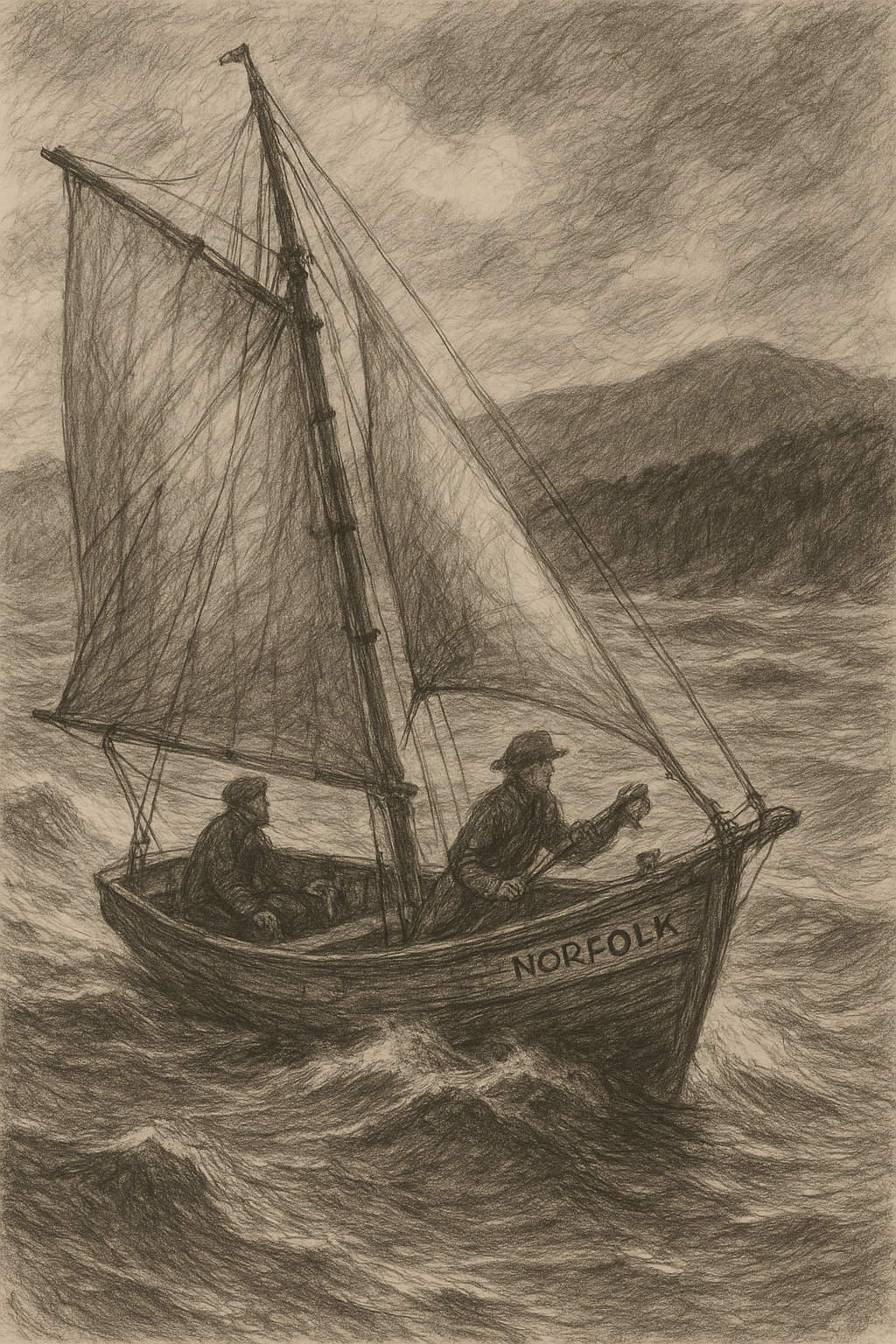 In 1798-99, Flinders and his mate George Bass hopped into a sloop named Norfolk and proved Tasmania was an island. But Flinders wasn’t the type to tick a box and call it a day.
In 1801, he set out again, this time to chart the whole Australian coastline. The trip? Brutal.
And still, night after night, Flinders kept going. Driven by sheer willpower, he mapped Australia like a man possessed.
After surviving all that? You’d think Flinders would head home to a hero’s welcome. Champagne, medals, the works. But no.
In 1803, shipwrecked and desperate for repairs, Flinders limped into French-controlled Mauritius. He had a French passport, so no big deal, right? Wrong. The island’s governor, General De Caen, wasn’t feeling generous.
Instead of helping, De Caen locked Flinders up for six miserable years.
Why?
Was Flinders a spy? Not really, though the French tried to spin that story.
Truth is? De Caen was a paranoid jerk who even ignored Napoleon’s own orders to release him.
Flinders could’ve escaped. He had chances. But he refused to break his parole. His honor meant more than his freedom.
So, he waited. Wrote. Sketched. Worked. And while his health crumbled, his mind stayed locked on the mission.
In 1810, Flinders finally made it back to England—a shattered man. But he clung to his work like a lifeline.
In 1814, his masterpiece, A Voyage to Terra Australis, was published.
The next day, he died.
Today, you’ll find Flinders’ name carved into towns, universities, and statues across Australia. Not because he was the flashiest hero, but because when everything crumbled, he stood firm.
Australia’s early history wasn’t built by grand armies or smooth-talking politicians. It was built by survivors. Settlers clinging to life on the edge of the world. Explorers like Flinders, who kept pushing even when the universe told them to quit.
Greatness? It isn’t always about reaching new lands.
Sometimes, it’s about enduring the storms it takes to get there.
