If you want the absolute crown jewel of the Tasmanian wilderness—the jagged, dramatic skyline that everyone associates with the island—this is where you go. Cradle Mountain is part of the Tasmanian Wilderness World Heritage Area. It is a land of ice-carved peaks, ancient pines, and moody weather that can deliver four seasons in a single hour.
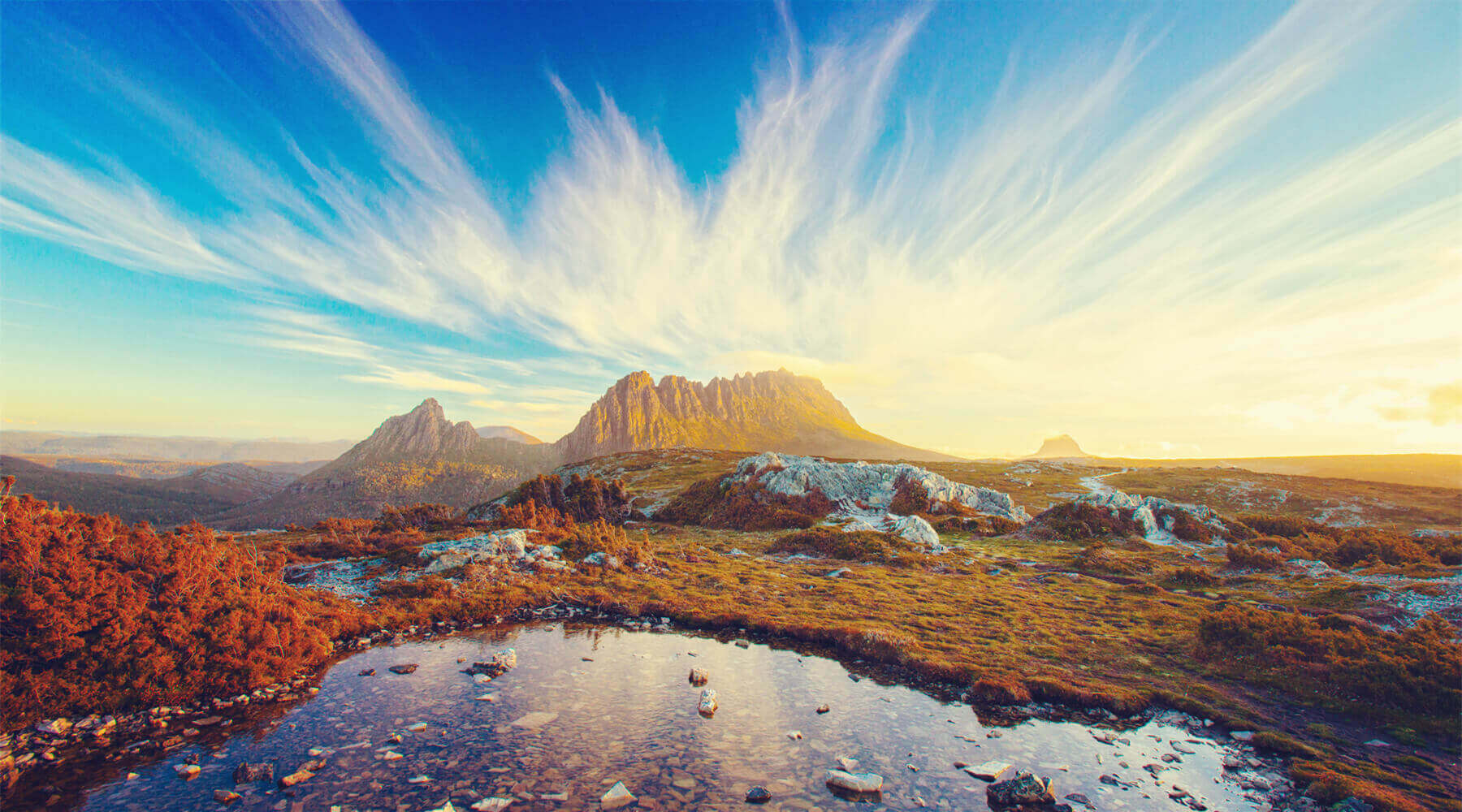
The iconic silhouette of the dolerite summit
Glassy reflections in Dove Lake
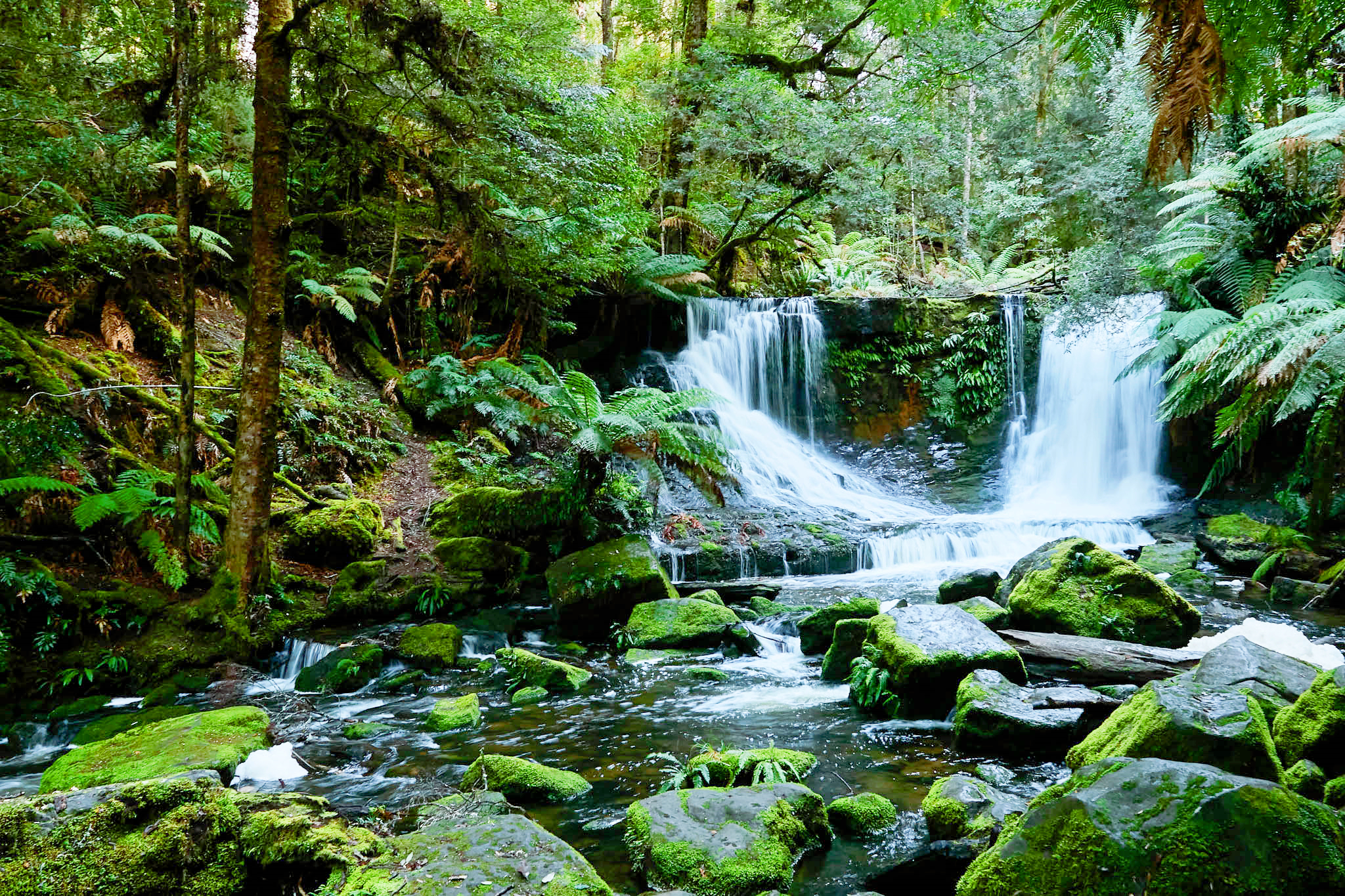
Ancient King Billy pines and “fagus” forests
Boardwalks through alpine moorlands
The northern gateway to the famous Overland Track
It’s the kind of place that feels ancient and powerful, where the landscape hasn’t changed much since the last ice age.
Cradle Mountain is located in the Central Highlands, accessible from the north or north-west.
About 1 hour 30 minutes from Devonport
About 2 hours 15 minutes from Launceston
About 4 hours 30 minutes from Hobart
Visitors must park at the Visitor Centre and use the shuttle bus service to access Dove Lake and the main trailheads.
👉 It’s a well-managed wilderness. Because it’s so popular, the shuttle system keeps the narrow roads quiet and protects the environment.
The landscape here is layered by elevation and moisture. It transitions from deep, mossy rainforest to exposed alpine plateau.
You start at the Valley Floor:
Enchanted Walk: A short, magical loop through moss-covered forests and alongside bubbling creeks.
Cradle Mountain Lodge: The cozy “base camp” with roaring fires and timber beams.
Then you reach the Highland Heart: 👉 Dove Lake Circuit The most famous walk in Tasmania. A 6km boardwalk loop that takes you right under the shadow of the mountain, past the iconic Boatshed, and through the “Ballroom Forest.”
From there, you can explore:
Marion’s Lookout: A steep climb that rewards you with a bird’s-eye view of the glacial lakes below.
Crater Lake: A hidden, deep-blue lake surrounded by towering cliffs.
Ronny Creek: The best spot to see wombats wandering through the button grass.
👉 It’s a destination that caters to everyone—from the casual “view-finder” to the hardcore alpine trekker.
Cradle Mountain is arguably the best place in Australia to see alpine wildlife up close.
What you might see:
Wombats: Everywhere at Ronny Creek (especially at dusk). They are surprisingly unfazed by humans here.
Tasmanian Devils: Frequently spotted at night near the lodges or at the dedicated “Devils @ Cradle” sanctuary.
Quolls: Both Spotted-tail and Eastern quolls inhabit these highlands.
Platypus: Often seen in the quiet pools along the Pencil Pine River.
Plant life:
Deciduous Beech (Fagus): Australia’s only cold-climate deciduous tree. It turns spectacular shades of gold and rust in late April.
Pencil Pines & King Billy Pines: Ancient conifers that can live for over 1,000 years.
Pandani: The world’s tallest heath plant, looking like something out of a prehistoric jungle.
👉 It’s a living laboratory of Gondwanan evolution.
Most people walk Dove Lake, take a photo of the Boatshed, and head back to the hotel. Big mistake.
The Ballroom Forest: A section of the Dove Lake walk that feels like a natural cathedral of ancient myrtle trees and moss.
Waldheim Chalet: The historic home of Gustav Weindorfer, the man who fought to have this area protected. It’s a beautiful, quiet spot away from the main shuttle stops.
Speeler Track: A less-traveled loop offering great views of the mountain without the Dove Lake crowds.
👉 If you have the fitness, getting just 200 meters higher than Dove Lake changes the perspective entirely.
Cradle Mountain is beautiful, but the weather is the boss here:
✔ World-class infrastructure and very well-marked trails.
✔ Exceptional dining and “wilderness-luxe” accommodation.
✔ Magical in the snow—it’s like a European alpine village.
But…
❗ It rains or snows over 250 days a year. Waterproof gear is non-negotiable.
❗ The shuttle bus is required—you can’t drive your own car to Dove Lake during the day.
❗ Summer can be very busy; book your accommodation and dinner well in advance.
👉 Best advice? Don’t be disappointed by rain or mist. The mountain is often more atmospheric and “Tasmanian” when the clouds are swirling around the peaks.
Cradle Mountain is a monument to the power of vision and conservation.
Gustav and Kate Weindorfer: Stood on the summit in 1910 and declared, “This must be a national park for the people for all time.”
Glacial Legacy: The entire landscape was carved by massive glaciers that retreated 10,000 years ago, leaving behind the jagged “cradle” shape.
Ancient Connection: This high country was a seasonal hunting ground for Tasmanian Aboriginal people for millennia.
Today, it represents the soul of the Tasmanian High Country: 👉 A place that remains rugged and wild, despite being one of the most visited spots in the state.
It’s the “Grand Finale” of any Tasmanian road trip. Pair it with:
Sheffield: The “Town of Murals” on your way in or out.
Ashgrove Cheese: For a post-hike snack on the drive back toward the coast.
Mole Creek Caves: If you want to see what the mountains look like from the inside.
👉 It is the definitive Tasmanian mountain experience.
Cradle Mountain doesn’t just meet expectations; it resets them. It’s not just a park. It’s:
Majestic
Ancient
Humbled by nature
And for most visitors… it’s the moment they realize that Tasmania isn’t just a place, it’s a feeling.