If you want to stand on the edge of the world and feel the true power of the Southern Ocean… this is where you go. The Tasman National Park protects the dramatic coastline of the Tasman Peninsula, featuring some of the highest sea cliffs in the Southern Hemisphere and a landscape carved by wind and salt.
Hemisphere-topping 300-meter vertical cliffs
Geometric rock formations (Tessellated Pavement)
Massive sea arches and deep blowholes
World-class multi-day trekking
Deep, haunting convict history nearby
It’s a place of extremes—where the land ends abruptly in a drop to the turquoise sea, and the history is as rugged as the rocks.
The park is located on the Tasman Peninsula, southeast of Hobart.
About 1 hour 15 minutes to Eaglehawk Neck
About 1 hour 30 minutes to Port Arthur or Fortescue Bay
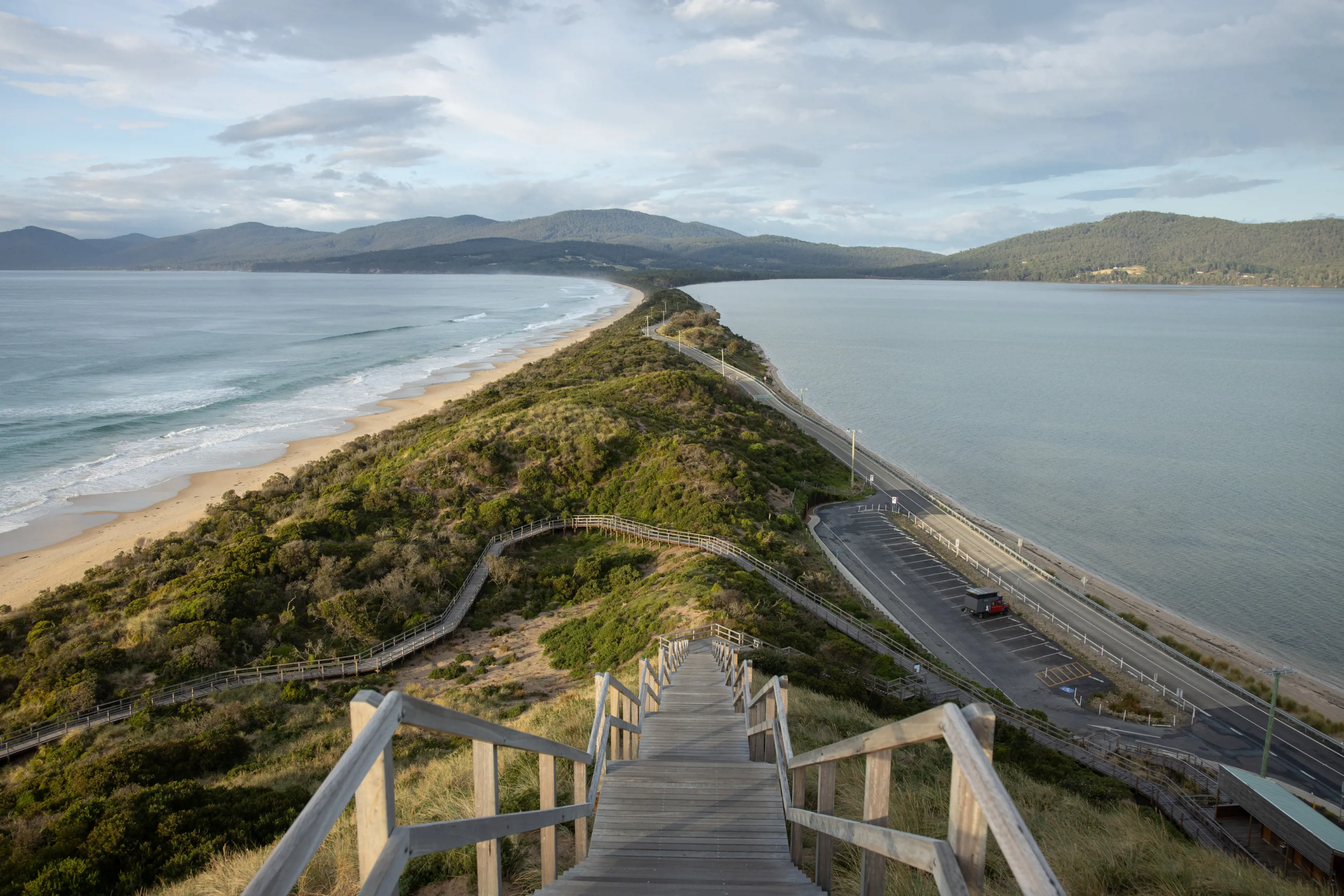
The drive takes you across the narrow “dog-line” at Eaglehawk Neck
Good sealed roads to all major geological sites
👉 Compared to the mountains, this is a coastal journey. It’s a drive of dramatic reveals, where every turn in the road opens up a new ocean vista.
This park is defined by its sculptural geology and sheer verticality. It’s a mix of monumental stone and crashing surf.
You start with the “Greatest Hits” near Eaglehawk Neck:
Tessellated Pavement: A flat rock shelf that looks like a perfectly laid Roman mosaic.
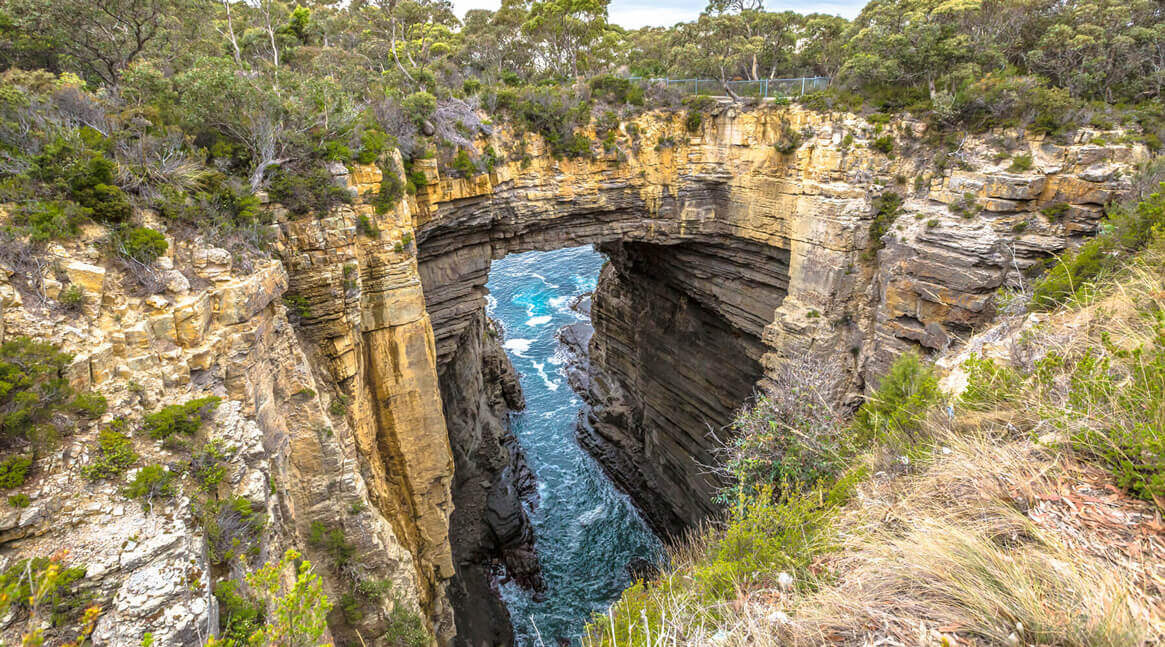
Tasman Arch: A massive natural bridge carved out by the sea.
The Blowhole: Watch the ocean force its way through tunnels with a thunderous roar.
Devils Kitchen: A deep, narrow trench where the cliffs have collapsed.
Then you head for the heights: 👉 Cape Raoul / Cape Hauy Part of the famous Three Capes Track. You walk along the spine of the peninsula to reach dolerite “candlesticks” that lurch out of the water like jagged teeth.
From there, you can explore:
Fortescue Bay: A stunning white-sand beach perfect for kayaking and camping.
Remarkable Cave: A tunnel through the cliff that perfectly frames the ocean.
Shipstern Bluff: Famous globally as one of the world’s heaviest and most dangerous “big wave” surfing breaks.
👉 It’s a park that rewards those who look down—and those who look out.
The peninsula is a sanctuary for marine life and rare coastal birds.
What you might see:
Fur Seals basking on the rocks at the base of the cliffs.
Whales (seasonal) and Dolphins often spotted from the cliff-top lookouts.
Swift Parrots (endangered) nesting in the blue gums.
Echidnas crossing the trails in the coastal heath.
Nature’s architecture:
Dolerite Columns: Gigantic hexagonal pillars formed by volcanic activity millions of years ago.
Coastal Heathland: Low-lying shrubs that burst into flower in late spring.
Giant Kelp Forests: Visible from the surface in the clear, nutrient-rich waters.
👉 It’s a landscape that feels raw and prehistoric, untouched by the modern world.
Most visitors see the Arch and the Kitchen then head straight to the Port Arthur ruins. Big mistake.
Crescent Bay: A hidden beach with massive sand dunes that feel like a desert meeting the sea.
Waterfall Bay Walk: A relatively flat cliff-top walk that offers better views than the main car parks with 10% of the crowds.
Maingon Bay Lookout: For a view of the Southern Ocean that makes you realize there is nothing between you and Antarctica.
👉 To find the peace here, you just have to walk 15 minutes away from the asphalt.
The Tasman Peninsula is spectacular, but the elements are in charge:
✔ World-class hiking trails for all levels.
✔ Incredible photography, especially during “golden hour.”
✔ A great year-round destination (stormy days are actually more dramatic).
But…
❗ The wind can be ferocious—stay well back from unfenced cliff edges.
❗ Many of the best views require a bit of walking (bring sturdy shoes).
❗ Mobile reception can be patchy once you leave the main highway.
👉 Best advice? Take a coastal cruise from Eaglehawk Neck. Seeing the 300-meter cliffs from the bottom looking up is a perspective you’ll never forget.
Tasman National Park isn’t just a natural wonder; it’s a place of profound human history.
The traditional land of the Pydairrerme people, who lived off the rich marine resources for millennia.
Home to the Port Arthur Historic Site, where the beauty of the landscape once contrasted with the brutality of the convict system.
The “Dog Line” at Eaglehawk Neck was the only escape route for convicts—guarded by fierce dogs and treacherous waters.
Today, it represents the power of nature to endure: 👉 A coastline that remains as wild and intimidating today as it was to the first ships that sighted it.
It’s the ultimate “History and Nature” double-header. Pair it with:
Port Arthur Historic Site: Spend the morning in the ruins and the afternoon on the cliffs.
Bangor Vineyard Shed: Stop in Dunalley for local wine and oysters on your way back.
Doo Town: A quirky village where every house has a name starting with “Doo” (like “Doo-Us-Proud”).
👉 It’s the best way to see Tasmania’s rugged edge and its colonial heart in one go.
Tasman National Park is where the island shows its teeth. It’s not just a coastline. It’s:
Dramatic
Vast
Hauntingly beautiful
And for most visitors… it’s the place that finally makes them understand why Tasmania was once called