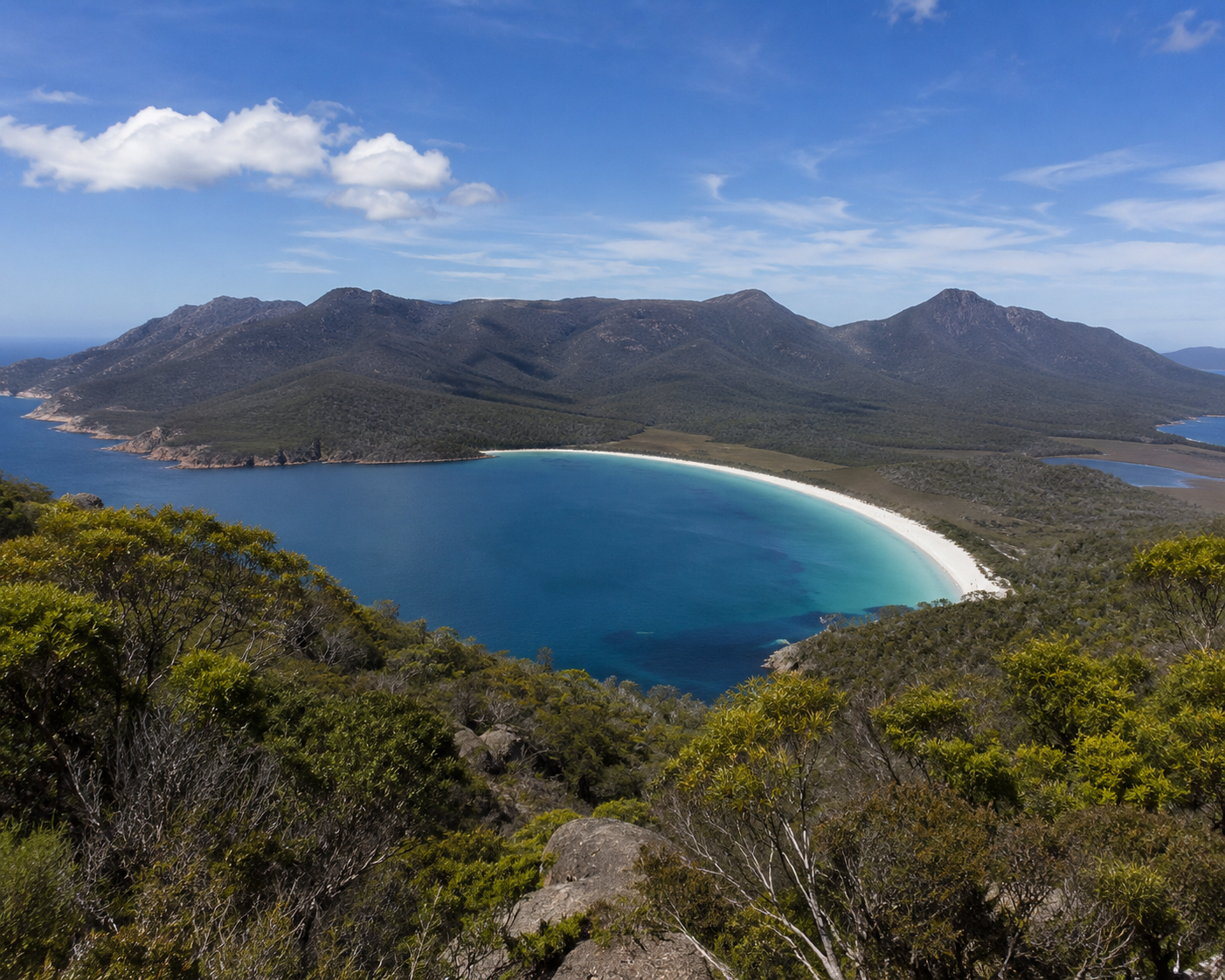
If you want to see the beach that consistently ranks among the most beautiful on the planet… this is where you go. Wineglass Bay is the superstar of Freycinet National Park on Tasmania’s East Coast. Defined by a near-perfect white sand crescent and framed by pink granite peaks, it is the ultimate reward for a bit of uphill effort.
Flawless turquoise water and white sand
The Hazards—towering pink granite mountains
Secluded bays and hidden lagoons
Sunshine (the East Coast is the driest part of the state)
Luxury lodges meeting wild coastal bush
It’s the quintessential Tasmanian coastal experience: rugged, colorful, and breathtakingly clean.
Freycinet National Park is located midway up the East Coast, near the town of Coles Bay.
About 2 hours 30 minutes from Hobart
About 2 hours from Launceston
Fully sealed roads lead to the main car park
A National Park Pass is required for entry
👉 Compared to the wild West Coast, Freycinet feels like a Mediterranean escape. It’s accessible, bright, and usually a few degrees warmer than the rest of the island.
The park is a playground of granite and sea. It’s a mix of strenuous climbs and pristine relaxation.
You start with the “Must-Do” ascent: 👉 Wineglass Bay Lookout A steady, uphill walk on a well-made track. When you reach the top, the forest opens up to reveal that view—the perfect curve of the bay held between the mountains.
From there, you can explore:
The Wineglass Bay Beach: Descend the 1,000+ stairs from the lookout to feel the sand between your toes (and remember, you have to climb back up!).
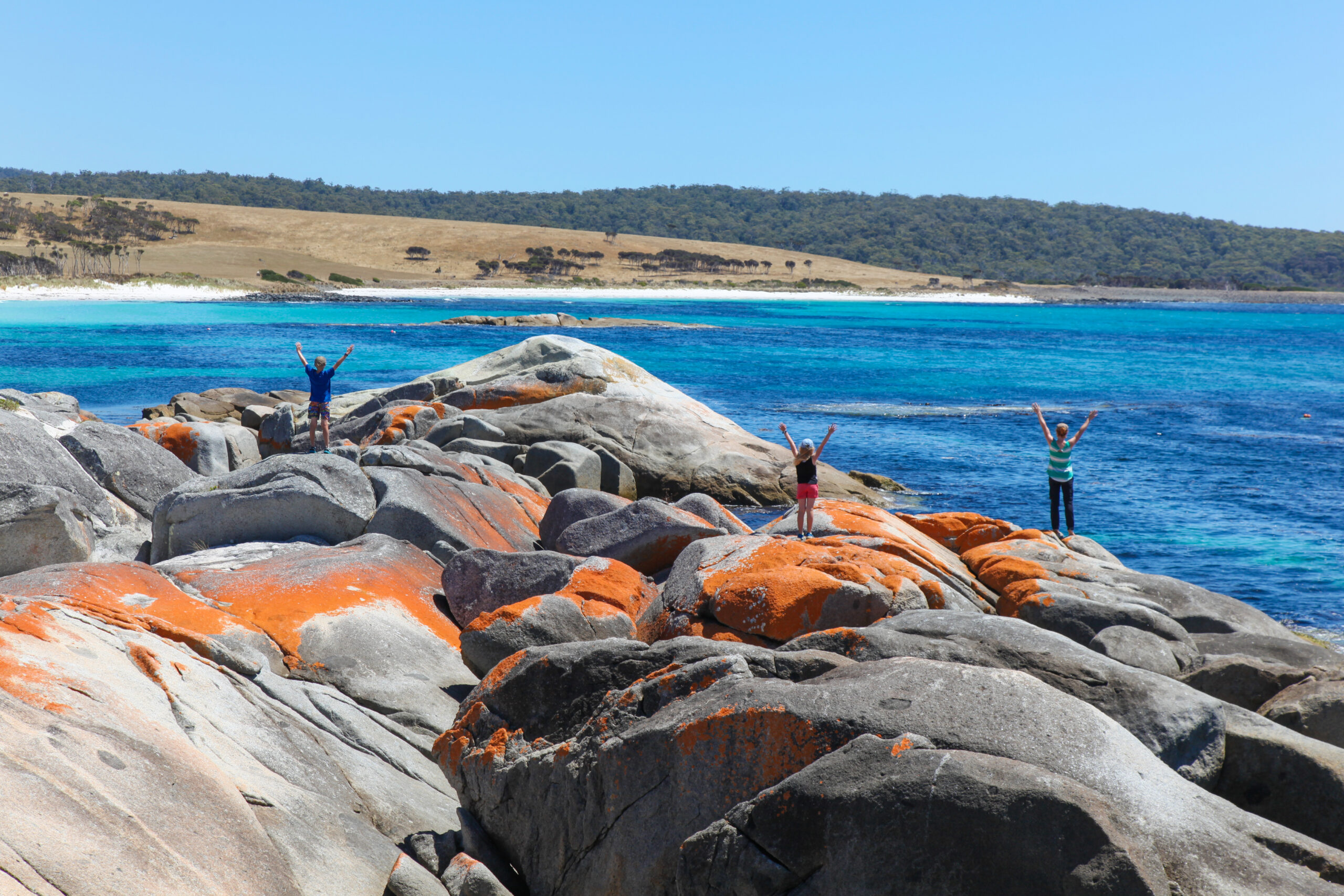
Honeymoon Bay: A stunning, sheltered spot with orange-tinted rocks, perfect for a picnic without the hike.
Cape Tourville Lighthouse: An easy, accessible boardwalk with sweeping views of the Tasman Sea and “The Nuggets” rock formations.
👉 It’s a place that caters to “view-hunters” and serious coastal trekkers alike.
Freycinet is where the bush meets the beach, creating a unique habitat for coastal species.
What you might see:
Bennett’s Wallabies: Very friendly (sometimes too friendly) near the car parks and campsites.
White-bellied Sea Eagles: Often seen patrolling the cliffs and bays.
Whales & Dolphins: Pods are frequently spotted in Great Oyster Bay during migration seasons.
Echidnas: Regularly seen foraging in the coastal heathland.
Nature’s Palette:
Pink Granite: The Hazards mountains get their color from orthoclase feldspar—they glow deep pink at sunset.
Wildflowers: During spring, the coastal scrub bursts into color with orchids and wattles.
Marine Life: The clear waters are home to diverse fish species and stingrays in the shallows.
👉 It’s a vibrant, high-contrast landscape that looks incredible in any light.
Most people walk to the lookout, take the photo, and leave for lunch. Big mistake.
Sleepy Bay: A short walk to a rugged, rocky cove that feels much more “wild” than the main bay.
Friendly Beaches: Miles of wide, white sand just north of the main park entrance—perfect for long, lonely walks.
Hazards Beach: If you walk across the “Isthmus” from Wineglass Bay, you’ll find this flatter, quieter beach facing the other direction.
👉 To avoid the crowds, skip the midday rush. The lookout is far more magical at first light.
Freycinet is popular for a reason, so a little strategy helps:
✔ Most reliable weather in Tasmania.
✔ Well-maintained tracks and excellent signage.
✔ World-class seafood (oysters!) available just outside the park.
But…
❗ The lookout walk is steep; it’s a workout for the heart and knees.
❗ Parking can be a challenge during peak summer/Easter holidays.
❗ There is no water on the trails—bring plenty with you, especially in summer.
👉 Best advice? Wear shoes with good grip. The granite sand on the tracks can be slippery, even when dry.
Freycinet has a history of discovery and conservation.
Named after the French explorer Louis de Freycinet in the early 1800s.
The traditional land of the Oyster Bay (Paredarerme) people, who left behind vast middens (shell deposits) throughout the park.
One of Tasmania’s oldest national parks (established in 1916 alongside Mount Field).
Today, it represents the balance of tourism and protection: 👉 A world-renowned icon that still feels like a true wilderness once you get off the main track.
It’s the highlight of the East Coast loop. Pair it with:
Freycinet Marine Farm: For the freshest oysters and mussels you’ll ever eat.
Kate’s Berry Farm: Near Swansea, for incredible ice cream and views back across the bay.
Devil’s Corner Cellar Door: For a glass of Pinot Noir with one of the best views in the state.
👉 It’s the ultimate “blue and gold” Tasmanian day.
Wineglass Bay is the photo everyone wants to take, but the feeling of being there is even better. It’s not just a beach. It’s:
Vibrant
Elegant
Stunningly clean
And for most visitors… it’s the moment they realize that Tasmania’s coastline is truly world-class.