If you want a peaceful escape that feels miles away from the city—despite being right on its doorstep—this is where you go. Established in 1818, the Royal Tasmanian Botanical Gardens (RTBG) is the second-oldest botanical garden in Australia. It sits on a slope overlooking the Derwent River, offering 14 hectares of curated beauty, historic structures, and rare plants.
Heritage-listed walls and historic gate lodges
The world’s only Sub-Antarctic Plant House
Charming Japanese gardens and lily ponds
Massive, century-old exotic trees
A “cool climate” sanctuary that changes with the seasons
It’s a place of quiet reflection where Hobart’s colonial history meets global botany.
The gardens are located within the Queens Domain, just north of the Hobart CBD.
5-minute drive or a 20-minute walk from the city center
Easy access via the Tasman Highway
Ample parking at both the main gate and the lower entrance
The Red Decker hop-on hop-off bus stops right at the gates
👉 Compared to the rugged mountain or coastal parks, this is Hobart’s most manicured and relaxing green space.
The gardens are a series of distinct “rooms,” each with its own atmosphere. It’s a mix of heritage architecture and botanical rarities.
You start with the historic heart:
The Arthur Wall: A unique heated wall built in 1829 to help grow exotic fruit in Tasmania’s cool climate.
The Conservatory: A beautiful sandstone building filled with a rotating display of flowering plants and a central fountain.
Then you enter the specialized zones: 👉 Sub-Antarctic Plant House A chilled, misty environment that mimics the harsh conditions of Macquarie Island. You’ll hear the sound of wind and see strange, “mega-herbs” that grow nowhere else on Earth.
From there, you can explore:
The Japanese Garden: Complete with a traditional red bridge, water features, and serene paths.
The Pete’s Patch: A working organic vegetable garden made famous by ABC’s Gardening Australia.
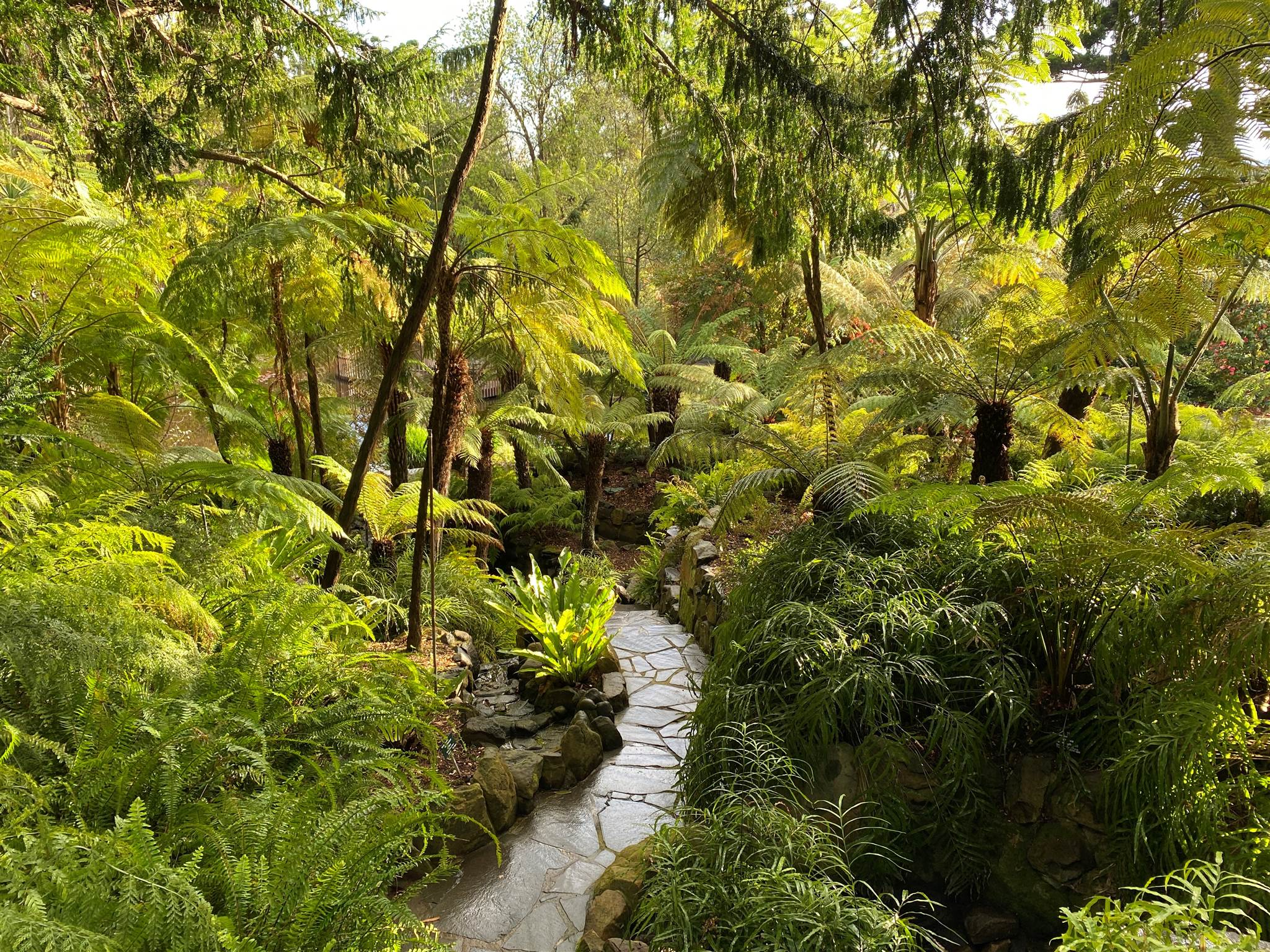
The Fernery: A lush, shaded walk through native and exotic ferns.
👉 It’s a space that works for a quick lunch-break stroll or a long afternoon of exploration.
The RTBG is packed with specific sites that offer more than just a stroll through the greenery.
What you shouldn’t miss:
The Lily Pond: Created in 1840, it features a majestic canopy of 19th-century conifers and a classic Victorian feel.
The Pinetum: One of the most significant collections of conifers in the Southern Hemisphere, dating back to the 1840s.
The Anniversary Arch: A decorative carved arch set at the base of stone steps, perfect for photos.
The Gatekeeper’s Cottage: A charming example of early colonial architecture located near the entrance.
Specialized Collections:
Tasmanian Flora Collection: A dedicated area showcasing rare and threatened species native to the island.
The Fuchsia House: A burst of color showcasing a massive variety of these delicate, bell-shaped flowers.
The Cactus & Succulent House: A great place to compare hardy plants from arid regions around the world.
👉 These attractions allow you to travel from the sub-Antarctic to the deserts of Africa in a single afternoon.
Most visitors stick to the main paths and the visitor center. Big mistake.
The Eardley-Wilmot Wall: Another historic boundary wall from the 1840s that tells the story of the garden’s colonial expansion.
The Rain Garden: A functional exhibition on water sustainability that demonstrates how to purify run-off.
The Lower Paths: These offer the best views of the Derwent River and the Tasman Bridge away from the crowds.
👉 You don’t need to be a botanist to enjoy this place. Just find a bench under an old oak tree and soak in the stillness.
The gardens are a year-round destination, but each season is different:
✔ Free entry (though a gold coin donation is appreciated).
✔ Accessible paths for prams and wheelchairs (though some areas are hilly).
✔ Excellent on-site dining at the Bird in Hand restaurant and kiosk.
But…
❗ The gardens are built on a slope; wear comfortable walking shoes.
❗ It can get busy on sunny weekends and during the spring community festivals.
❗ Drones and ball games are not permitted to keep the atmosphere peaceful.
👉 Best advice? Visit in the morning before the wind picks up off the river. The reflections in the ponds are perfect, and the tranquility is at its peak.
The RTBG is a living link to Tasmania’s early colonial days.
Established just 14 years after Hobart was founded, it was originally used as a “Colonial Garden” to produce food for the growing settlement.
The gardens sit on the traditional land of the Muwinina people, part of the Palawa nation.
Many of the oldest features were built by convict labor, using local sandstone and bricks that still show their age today.
Today, it represents a commitment to conservation: 👉 A world-class botanical institution that protects rare species through its seed bank and research programs.
The gardens are the perfect “bridge” between city culture and nature. Pair it with:
TMAG: Start with history in the morning, then lunch in the gardens.
Mona: The gardens are just a short drive from the Brooke Street Pier where the ferry departs.
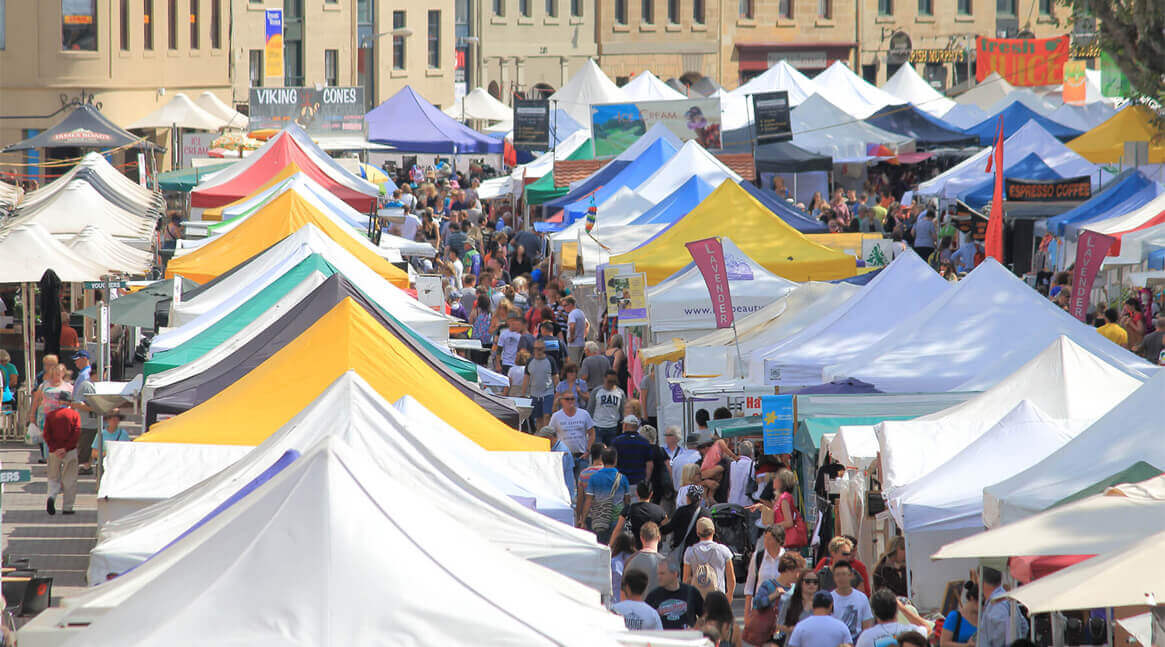
Salamanca Market: If it’s a Saturday, browse the market then escape to the gardens for a quiet afternoon.
👉 It’s the easiest way to find total peace without leaving the Hobart city limits.