 Culture is the first thing we ever know.
It’s the ground under our feet, the language in our mouth, the invisible net that catches us when we fall.
It’s how we know who we are.
But what happens when that culture is torn away?
What happens when you’re pushed out into a world that doesn’t want you, or worse, wants you only if you leave yourself behind?
This is the story of Kikatapula.
A man caught between two worlds, never fully belonging to either.
A Boy of the Oyster Bay People
Kikatapula was born around 1800 into the Paytirami clan of the Oyster Bay people, on the east coast of what we now call Tasmania.
He grew up knowing his land the way you know your own body — the rivers, the rocks, the way the wind changes when the seasons turn.
Then one day, everything shifted.
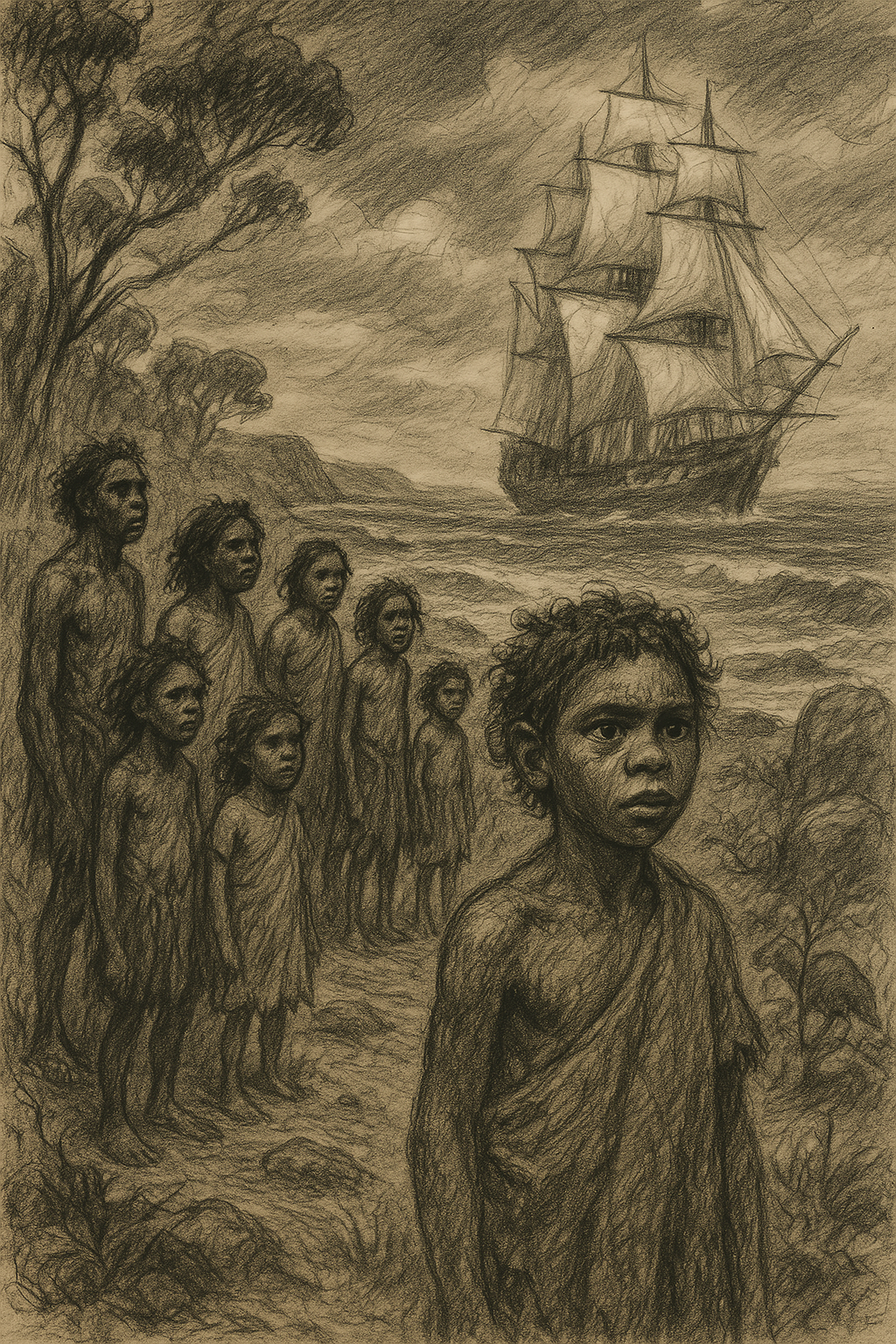
A giant sailing ship appeared off Maria Island.
His people ran in fear, because how do you even begin to understand something so alien, so unnatural?
Soon after came the British sealers.
And if the ship had been frightening, the men were worse.
Violent. Brutal. Kidnapping Palawa women and girls, using them as sex slaves.
Kikatapula’s own kin were among those taken.
His people fought back, destroying the sealers’ furs and huts, but it was a losing battle.
The violence kept growing. Convict bushrangers, settlers, new diseases, old enemies — all crashing into his world like a flood.
As a young boy, Kikatapula bore a deep scar on his forehead, a literal mark of the brutality he survived.
Torn from Home
At some point during this chaos, Kikatapula was swept into the colonial world.
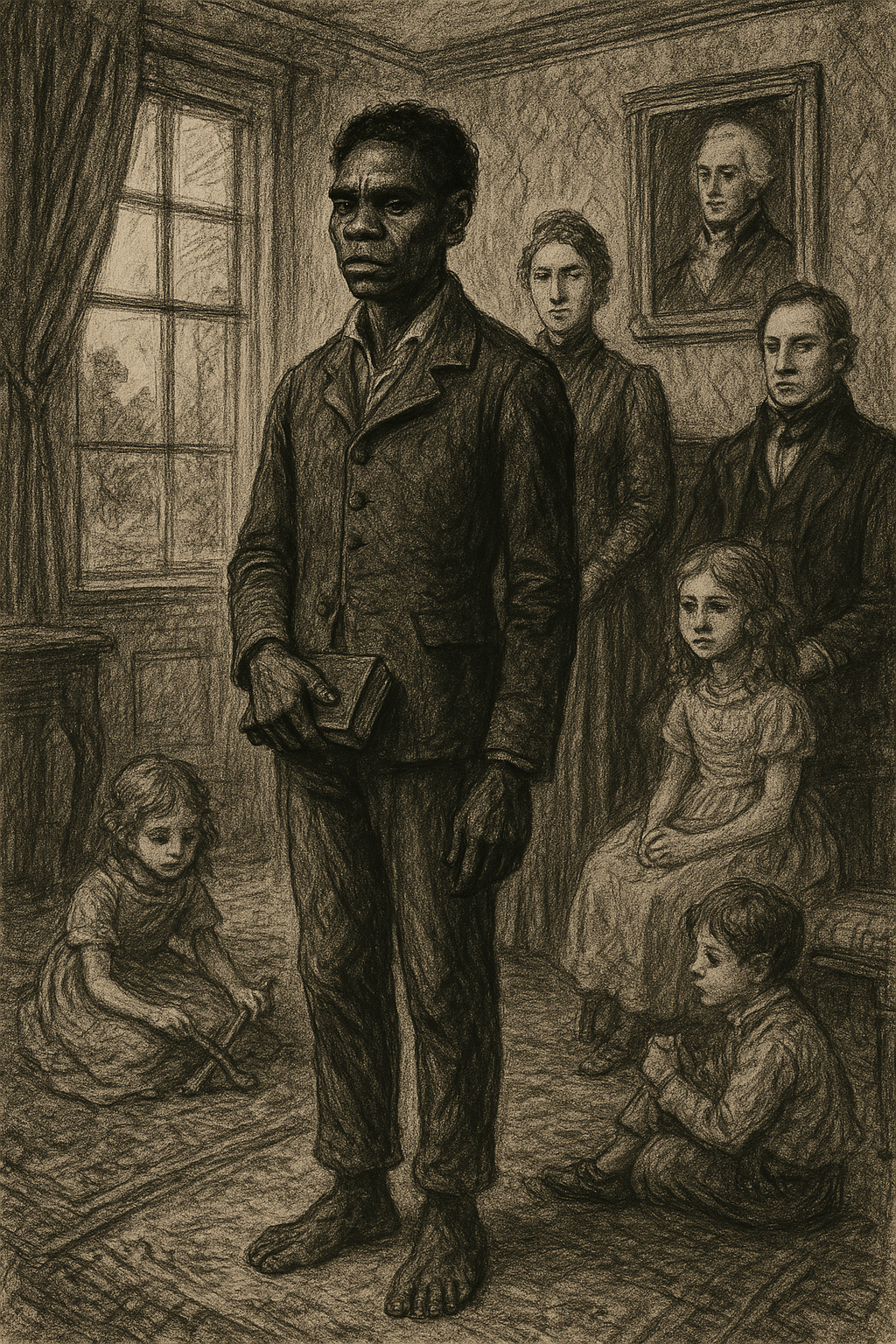
Whether he was taken or went willingly is lost to history. But by 1819, he was living in Hobart, under the roof of Thomas and Sarah Birch — a wealthy British couple.
They dressed him in their clothes.
Taught him to read and write English.
Baptised him Christian and renamed him Black Tom Birch, a name that wiped away his real one.
He took care of their children. He said his prayers.
But let’s not sugarcoat it: no matter how well he spoke their language or folded himself into their world, he would never truly be one of them.
He was a curiosity. A pet project.
A living trophy of “civilisation.”
Not family.
Lost and Left Behind
In 1821, Thomas Birch died.
And with him went the fragile protection Kikatapula had.
Almost immediately, he was treated like just another expendable worker.
Suddenly, the polished English and Christian manners didn’t mean much.
He was still Palawa. Still Other. Still disposable.
And deep down, he must have known it.
 The Spark of Resistance
In late 1822, a man named Musquito arrived.
An Aboriginal warrior from New South Wales, exiled to Tasmania for fighting British settlers on the mainland.
Musquito led a group called the “tame mob”, Aboriginal survivors who were done playing nice.
He found Kikatapula at Duck Hole Farm.
Talked to him. Reached into that buried, battered core of belonging.
And reminded him: you are not one of them. You never will be.
Kikatapula left the colonial life behind.
He returned to his people, and to war.
The Choice
Culture doesn’t just vanish because someone teaches you another language.
It doesn’t die because you get baptised or wear a different coat.
It lives in your blood, your bones, your memory.
Kikatapula had lived between two worlds.
Now, he had chosen a side.
And it would cost him everything.
Stick around for part 2.
Culture is the first thing we ever know.
It’s the ground under our feet, the language in our mouth, the invisible net that catches us when we fall.
It’s how we know who we are.
But what happens when that culture is torn away?
What happens when you’re pushed out into a world that doesn’t want you, or worse, wants you only if you leave yourself behind?
This is the story of Kikatapula.
A man caught between two worlds, never fully belonging to either.
A Boy of the Oyster Bay People
Kikatapula was born around 1800 into the Paytirami clan of the Oyster Bay people, on the east coast of what we now call Tasmania.
He grew up knowing his land the way you know your own body — the rivers, the rocks, the way the wind changes when the seasons turn.
Then one day, everything shifted.
A giant sailing ship appeared off Maria Island.
His people ran in fear, because how do you even begin to understand something so alien, so unnatural?
Soon after came the British sealers.
And if the ship had been frightening, the men were worse.
Violent. Brutal. Kidnapping Palawa women and girls, using them as sex slaves.
Kikatapula’s own kin were among those taken.
His people fought back, destroying the sealers’ furs and huts, but it was a losing battle.
The violence kept growing. Convict bushrangers, settlers, new diseases, old enemies — all crashing into his world like a flood.
As a young boy, Kikatapula bore a deep scar on his forehead, a literal mark of the brutality he survived.
Torn from Home
At some point during this chaos, Kikatapula was swept into the colonial world.
Whether he was taken or went willingly is lost to history. But by 1819, he was living in Hobart, under the roof of Thomas and Sarah Birch — a wealthy British couple.
They dressed him in their clothes.
Taught him to read and write English.
Baptised him Christian and renamed him Black Tom Birch, a name that wiped away his real one.
He took care of their children. He said his prayers.
But let’s not sugarcoat it: no matter how well he spoke their language or folded himself into their world, he would never truly be one of them.
He was a curiosity. A pet project.
A living trophy of “civilisation.”
Not family.
Lost and Left Behind
In 1821, Thomas Birch died.
And with him went the fragile protection Kikatapula had.
Almost immediately, he was treated like just another expendable worker.
Suddenly, the polished English and Christian manners didn’t mean much.
He was still Palawa. Still Other. Still disposable.
And deep down, he must have known it.
The Spark of Resistance
In late 1822, a man named Musquito arrived.
An Aboriginal warrior from New South Wales, exiled to Tasmania for fighting British settlers on the mainland.
Musquito led a group called the “tame mob”, Aboriginal survivors who were done playing nice.
He found Kikatapula at Duck Hole Farm.
Talked to him. Reached into that buried, battered core of belonging.
And reminded him: you are not one of them. You never will be.
Kikatapula left the colonial life behind.
He returned to his people, and to war.
The Choice
Culture doesn’t just vanish because someone teaches you another language.
It doesn’t die because you get baptised or wear a different coat.
It lives in your blood, your bones, your memory.
Kikatapula had lived between two worlds.
Now, he had chosen a side.
And it would cost him everything.
Stick around for part 2.
